The Holy Spirit comes to encounter people in a variety of ways. From tears, laughter, dancing, falling down, shaking, and speaking in tongues, the Spirit of God colliding with a human spirit, and possibly other spiritual beings, tends to cause a reaction, not always, but often. The Bible is full of these types of accounts, and if you’re involved in a Spirit-filled church, you’ve probably witnessed, if not experienced personally, some Holy Spirit encounters. This article will break down the language, and the experiences that surround the ways people are touched by the Holy Spirit, to bring clarity and distinction between types of interactions that happen when He comes.

Receiving Jesus and the Holy Spirit
You’ve probably heard terminology that speaks of the onset of salvation. Terms such “born again,” “saved,” and “conversion” refer to a time when a person decides to invite Jesus Christ into their life to be their Lord and Savior. This moment is the beginning of the process of salvation. People confuse this, thinking that salvation is a one-time deal. No, salvation is on-going. It is a process of sanctification, consecration, and wholeness. This is why Philippians 2:12 tells readers to “work out your salvation in fear and trembling.” The language about salvation and conversion is often used interchangeably, however there are differences between the initial moment you are saved, and the process that follows for the rest of your life.
What does all this have to do with the Holy Spirit? When someone decides to accept Jesus, the Holy Spirit comes to live on the inside of the them. This is called receiving the Spirit, and is also referred to as the indwelling of the Holy Spirit. This supernatural occurrence doesn’t take place because someone says “the sinner’s prayer,” unless they genuinely mean that prayer whole heartedly. People often misunderstand this, thinking if they ask Jesus into their heart, He will come and make everything in life better. Wrong. He will make you better, if you allow Him, but that doesn’t mean it will be a skip through the park.
Ok, Jesus (meaning His Spirit, the Holy Spirit) will come and help you. That’s the idea, you make Him Lord, He tells you how to best live your life, but that doesn’t make it necessarily easier, and if you really understand being born again, it’s no longer “your life,” your life now belongs to Him. That’s why you might also hear being born-again referred to as “giving your life to Jesus.” So, the Holy Spirit comes, He indwells you, and He will speak to you. This is how God enables you to overcome sin, and grows you into maturity as a follower of Jesus. The Holy Spirit will also be at work in you to bear the fruit of the Spirit; love, joy, peace, patience, kindness, goodness, faithfulness, gentleness, and self-control (Galatians 5:22-23).
Water baptism
Some also call the receiving of the Spirit, the baptism of the Spirit, but we’ll get into that more later. The initial seal of the Holy Spirit is Him coming into your heart, and becoming one with your spirit, the moment you accept Jesus and turn your life over to Him. Let’s begin to go deeper into another type of baptism, water baptism. This is a public confession of your faith in Jesus. Many people and denominations practice a tradition with babies and young children, where they are sprinkled with holy water and dedicated to the Lord, often called Christening. This is not actually the same as water baptism. A baby or young child that has not decided for themself, to give their life to Jesus, has not been water baptized.

Water baptism is the choice of the believer, to make a public declaration of faith in Christ. It’s a full submersion of the person into water. This baptism is symbolic in that, when you go down into the water you are dying with Christ, and when you come up out of it, you are being resurrected with Him. When Jesus was baptized by John the Baptist, He received the Holy Spirit, then went straight into the wilderness. It is believed that the Holy Spirit is what empowered Him in those 40 days and nights to fast, and overcome the temptations that would come from the devil. It is very likely that the Holy Spirit will also increase in empowerment for the believer who has been water baptized.
Fire baptism and the Day of Pentecost
John the Baptist said something just before he water baptized Jesus that’s so intriguing. He said, “I indeed baptize you with water unto repentance, but He who is coming after me is mightier than I, whose sandals I am not worthy to carry. He will baptize you with the Holy Spirit and fire,” (Matthew 3:11). Fire?! Yes, this word in the Greek is pýr, a noun meaning literal fire, associated with a word from Sanskrit pu, which means to purify. So, the baptism of fire, also phrased “the refiner’s fire,” “fire of God,” and “holy fire,” is associated with God’s purification, cleansing, and judgement.
Some believe that fire baptism is connected to the Day of Pentecost because it says in Acts 2:1-4
“When the day of Pentecost arrived, they were all together in one place. And suddenly there came from heaven a sound like a mighty rushing wind, and it filled the entire house where they were sitting. And divided tongues as of fire appeared to them and rested on each one of them. And they were filled with the Holy Spirit and began to speak in other tongues as the Spirit gave them utterance.”
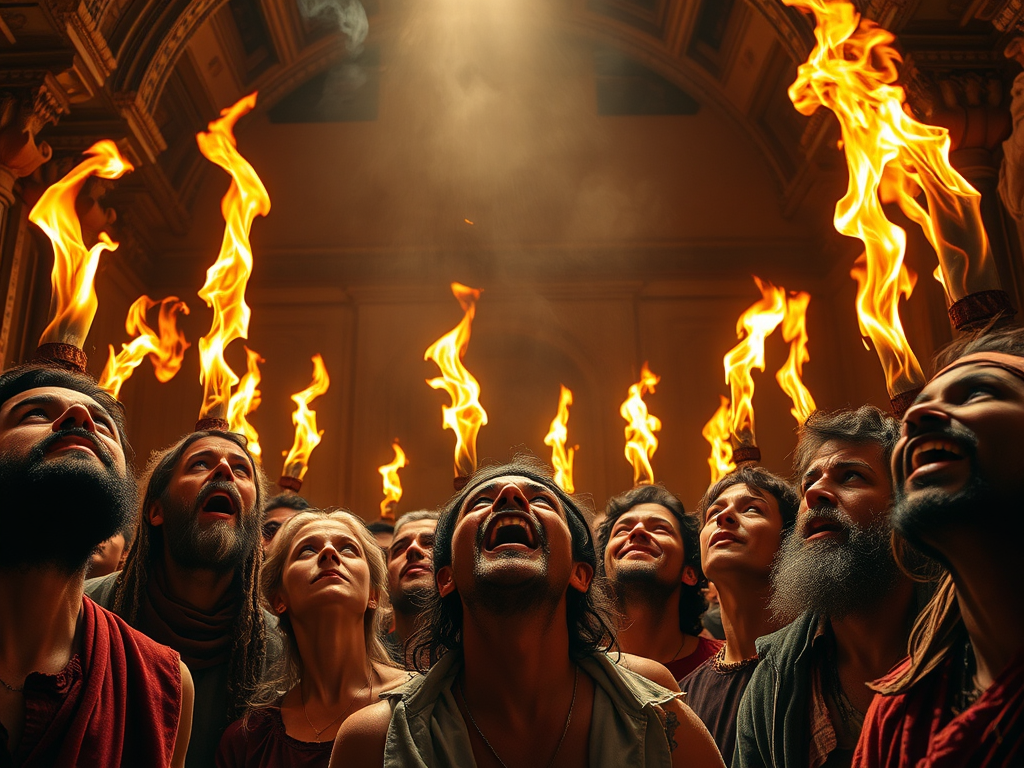
The word for fire in verse 3 here, is the same word used in Matthew 3:11. The connection of the baptism of fire to the tongues of fire makes sense, since it is the same word. There are different Bible translations which use different verbiage in the context of the same verse, and words that may appear the same, but actually have different meanings in their original Hebrew or Greek form. For this reason, there are varied opinions surrounding definitions of different types of baptisms and Holy Spirit encounters.
The Disciples receive the Holy Spirit before the Day of Pentecost
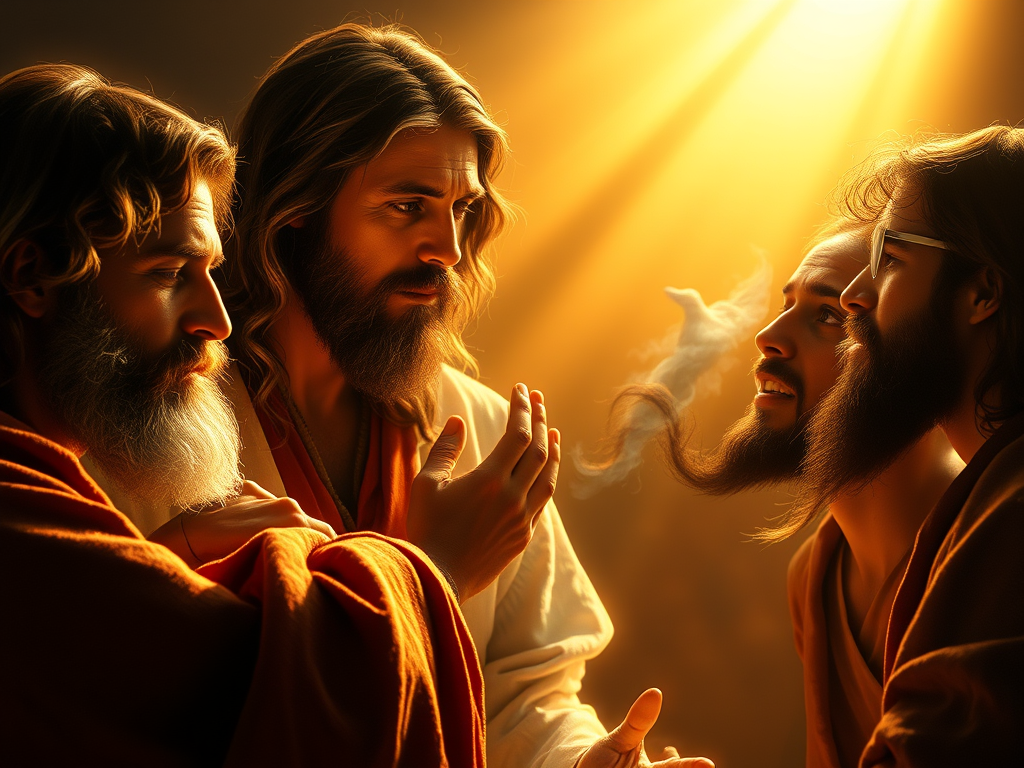
Here’s another point to consider. Jesus said in John 20:21-22, “ ‘Peace be with you, As the Father has sent me, even so I am sending you,’ And as he had said this, he breathed on them and said to them, ‘Receive the Holy Spirit.’ ” This took place after Jesus’s death and resurrection, and before the disciples went to wait for the Holy Spirit in the Upper Room. So, the indwelling or receiving of the Holy Spirit is one encounter, and the infilling of the Holy Spirit (what happened to about 120 in the Upper Room) is a subsequent encounter. The disciples received the Holy Spirit in John 20:21-22, but they were filled with the Holy Spirit on the Day of Pentecost.
Differing viewpoints of Spirit Baptism
Which is the baptism of the Holy Spirit, the indwelling or the infilling? It depends who you ask. Many believe that the baptism of the Holy Spirit would be considered synonymous with receiving the Spirit at the time of conversion. This is the view most popular among Evangelical and Reformed Christians. Supporting scripture for this stance would be 1 Corinthians 12:13, “For we were all baptized by one Spirit so as to form one body…” This verse refers to all believers making up the body of Christ, and denotes that when you are saved, you are baptized into the body.
The other take on this, is that baptism of the Spirit is a subsequent experience. This is widely held by Pentecostals and Charismatics, who see the events in the Upper Room, or what’s called the infilling of the Holy Spirit, to be a separate encounter, in which a believer is empowered with ministry gifts. So, in this point of view the Holy Spirit is received and indwelt at conversion, but the baptism is considered to take place during the initial infilling of the Spirit. In support of this stance would be Acts 1:5, “for John baptized with water, but you will be baptized with the Holy Spirit not many days from now.” Remember they had already received the Holy Spirit in John 20:21-22 when Jesus blew on them, so that verse lends itself to support this stance too.
Multiple fillings of the Holy Spirit
Avid readers and students of the Bible know that there can be multiple fillings of the Holy Spirit. The Day of Pentecost in the Upper Room marks that group of about 120 for the first infilling. A few chapters later, and in Acts 4:31 we have the same group being filled for a second time. “After they prayed, the place where they were meeting was shaken. And they were all filled with the Holy Spirit and spoke the word of God boldly.” Again in Acts, we see Paul experience multiple fillings, both in 9:17 and 13:9. The language in these 2 instances is somewhat tricky, and one might argue that the first is his indwelling or conversion experience where he receives the Holy Spirit. Others feel that he had an encounter of simultaneously receiving an indwelling and an infilling.
In Ephesians 5:18 Paul instructs the church not to be drunk on wine, but instead be filled with the Spirit. This has a few interesting take-aways. For one, why is he comparing being drunk on wine with being filled with the Spirit, you may wonder. When the disciples came out of the Upper Room on the Day of Pentecost they were accused of being drunk! Peter responds to the accusations in Acts 2:15 saying, “these people are not drunk as you suppose. It’s only nine in the morning!” That tells us that in the moment of being filled with the Spirit, people might behave kind of drunk. Here’s the support for multiple fillings; the Ephesians, whom Paul is speaking to in Ephesians 5:18, already have the Spirit. Also the verb for the “being filled with the spirit,” part of this verse, in the original Greek form is present tense and means “be filled continually.” All of this points to multiple infillings of the Holy Spirit.
As you can probably fathom, this whole array of descriptions of differing types of baptisms and Holy Spirit encounters creates a variety of theology surrounding these experiences. This is good to know because if the question is being asked, “is so and so baptized,” or “baptized in the Spirit?” There would need to be further clarification. Do they mean water baptized, as in submerged in water, or simply christened? Are they referring to receiving the Holy Spirit upon conversion, or endowed with the spiritual gifts of the Holy Spirit, as some believe takes place during the infilling of the Spirit.
Indwelling vs. infilling and their purposes
The common belief, excluding Cessationists, who don’t believe the supernatural power of the Spirit is for today, is that there can be multiple encounters with the Holy Spirit. The debate is more about which is called the baptism of the Spirit. Many believers would agree that a person receives the Holy Spirit at conversion (indwelling) and later, or possibly at the same time they could encounter Him and experience the infilling.
A number of people believe that the indwelling is when the Holy Spirit begins to empower someone for the sake of their own spiritual growth; to overcome sin and bear fruit of the Spirit. Then when someone experiences the infilling, they would become empowered with the gifts of the Spirit, aka spiritual gifts, which are said to be for others. These would be what is listed in 1 Corinthians 12:7-11,

“To each is given a manifestation of the Spirit for the common good. For to one is given through the Spirit the utterance of wisdom, and to another the utterance of knowledge according to the same Spirit, to another faith by the same Spirit, to another gifts of healing by the one Spirit, to another the working of miracles, to another prophecy, to another the ability to distinguish between spirits, to another various kinds of tongues, to another the interpretation of tongues. All these are empowered by one and the same Spirit, who apportions to each one individually as he wills. “
Baptism by evidence of speaking in tongues
You might hear language like “baptism of the Spirit by the evidence of speaking in tongues.” This school of thought is that those who speak in tongues are baptized in the Spirit, while not operating in the gift of tongues would indicate that a person is not. Speaking in tongues is a whole other debatable topic, that we won’t be getting into here.
Going deeper
If you want to do a deep dive into all of this on your own, the scriptures will help you to understand why people have wrestled over these concepts and the language we use to describe them for a very long time. What you read in one translation, may have different verbiage in another, so you might want to get into a reference book, like the Strong’s Concordance, which will show you the original meaning of words in the Bible from the Hebrew and Greek. Hopefully this article shed some light on what’s certainly an interesting and highly debatable subject matter; baptisms and Holy Spirit encounters!
Key verses that reference baptisms and Holy Spirit encounters.
| Book | Topic | Verse(s) | Summary |
|---|---|---|---|
| Isaiah | Prophecy of the Spirit | Isaiah 44:3 | God promises to pour out His Spirit like water on His people. |
| Ezekiel | New Covenant & Spirit | Ezekiel 36:25–27 | Cleansing and a new heart through the Spirit. |
| Joel | Prophecy of Outpouring | Joel 2:28–29 | God will pour out His Spirit on all people. |
| Matthew | Baptism with Spirit & Fire | Matthew 3:11; 28:19 | John prophesies Spirit baptism; Jesus commands baptism in the Trinity. |
| Mark | Spirit Baptism Foretold | Mark 1:8 | John predicts Jesus will baptize with the Holy Spirit. |
| Luke | Spirit Baptism Foretold | Luke 3:16 | Same as above; Luke’s account. |
| John | Spirit Coming After Jesus | John 1:33; 3:5; 7:37–39, 20:21-22 | Spirit will come after Jesus; new birth requires Spirit and water, and disciples receive the Spirit |
| Acts | Pentecost / Spirit Falls | Acts 1:4–5; 2:1–4 | Promise and fulfillment of Spirit baptism. |
| Acts | Peter Explains Spirit Baptism | Acts 2:16–18, 38 | Peter quotes Joel; calls people to repent and receive the Spirit. |
| Acts | Samaritans Receive Spirit | Acts 8:12–17 | They are baptized in water, receive Spirit later through apostles. |
| Acts | Paul’s Spirit Encounter | Acts 9:17–18 | Paul is filled with the Spirit and baptized. |
| Acts | Gentiles Receive Spirit First | Acts 10:44–48 | Holy Spirit falls before water baptism. |
| Acts | Peter Reflects on Event | Acts 11:15–16 | Connects Gentile outpouring to Jesus’ promise of Spirit baptism. |
| Acts | Ephesian Believers Empowered | Acts 19:1–6 | Rebaptized and filled with the Spirit by Paul. |
| Romans | Baptism into Christ | Romans 6:3–5; 8:9–11 | Baptism represents death/resurrection; all believers have the Spirit. |
| 1 Corinthians | Spirit Baptism into One Body | 1 Cor. 12:13 | Spirit baptism joins all believers into Christ’s body. |
| Galatians | Spirit Received by Faith | Gal. 3:2–5, 14, 27 | Spirit is received by faith; baptism clothes us with Christ. |
| Ephesians | Sealed with the Spirit | Ephesians 1:13–14 | Believers are sealed with the Holy Spirit at conversion. |
| Titus | Spirit Renewal at Salvation | Titus 3:5–6 | The Spirit washes and renews at salvation. |
| Hebrews | Foundation of Baptisms | Hebrews 6:1–2 | Baptisms and laying on of hands are part of Christian basics. |
| 1 Peter | Spiritual Meaning of Baptism | 1 Peter 3:21 | Baptism is a symbol of a clear conscience before God. |
| Revelation | Spirit’s Final Invitation | Revelation 22:17 | The Spirit and Bride call people to come to Christ. |
 Sally JC Journals